“We can’t destroy the planet if we don’t live on it.”
– Tariku Negasi

Once in every generation, you have one story that’s so inspiring, it seems made up. You get one person whose achievements stretch the limits of possibilities, not just for themselves but for the entire world. From Bill Gates to Mark Zuckerberg and now Tariku Negasi.
These people are known for introducing innovative ideas that have changed the world. The impact is so profound that we don’t care if the ideas were stolen or if they’ve taken credit for work that did not belong to them. We simply cannot talk about life today without thinking of how their ideas have changed everything!
First, it was Bill Gates with computing, then Mark Zuckerberg with Social Media, and now it’s Tariku Negasi with Development, the future of humanity.
While Gates and Zuckerberg brought new things to the world, Negasi did the opposite; he took the world to a totally new ‘thing’. You probably know a lot about Gates and Zuckerberg but many people are yet to hear the story of the enigmatic Tariku Negasi. Here’s the story of one man’s rise from obscurity to world leadership!
Birth and Early Life
Negasi was born on August 29th, 2004, in Semera in the North-Eastern Afar region of Ethiopia. His parents were Lecturers at Semera University. Very little is known about his upbringing except for the fact that his parents were disciplined Christians. They were determined to give their kids the best education they could afford. The third of four children, Negasi had shown signs of something special early on. At first it was misread as mischief. There was a growing arrogance backed by his performance in school and an unusual understanding beyond his age.
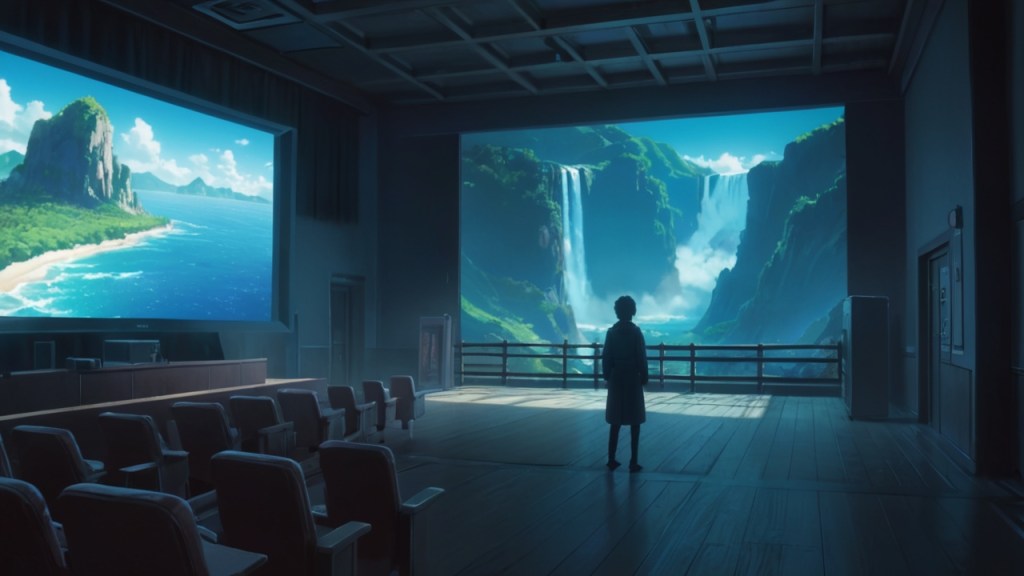
By the age of 15, Negasi had won the National Innovation Award for his 3D digital remapping of the world. He had used a combination of the existing digital map and the Unreal Gaming Engine to create a world he called Development 1.0. News of his invention spread around the internet because of the time relevance of Dev 1.0. It became the answer to remote work during the pandemic years. Paired with a uRetina, users could experience a digital replica of the entire world without leaving their comfort zones. You could create an avatar that would go to work, visit friends and virtually tour the world.
He was courted by the leading companies in the tech space but Negasi rejected their offers. There were rumours that Sandhurst Games were ready to buy a 10 per cent stake in his creation for about $80 million at that time but he turned it down too.
Negasi was out of the public eye for two years while the world adopted his uRetina and Development creation, commercialised by a family friend’s ambitious tech company – MaDe, founded by Harry Coleman.
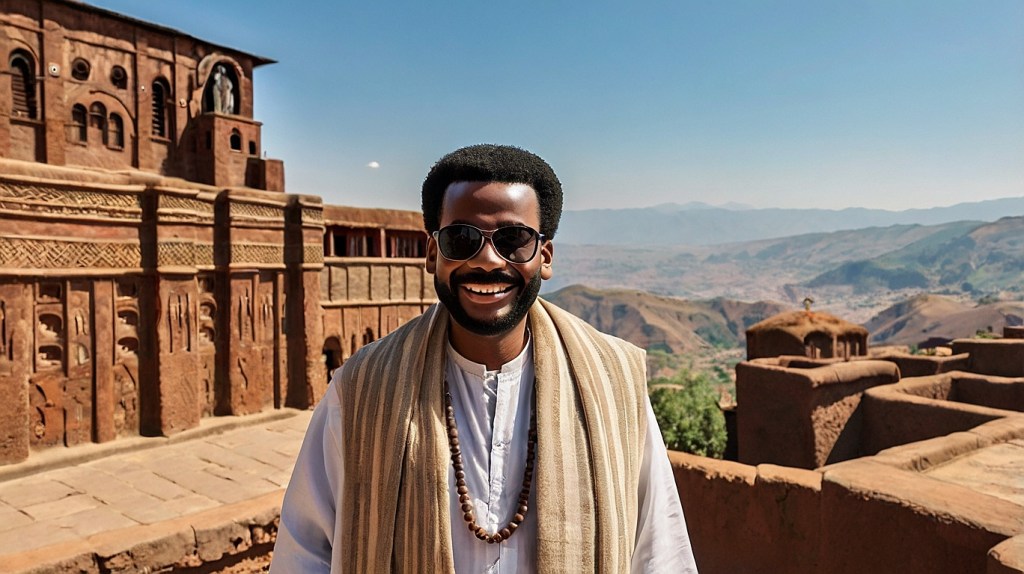
There were reports that he spent those 2 years at one of the Coptic churches at the famous Lalibela. Some pilgrims and tourists claimed they had spotted him in one of the caves but again, nothing was confirmed. The next time the world heard of Negasi was a leaked report that he was a student at the hermetic Astra school in California. The school was built by a tech billionaire to cater to special kids, with a specially designed developmental structure tailored to match each student’s natural inclinations and talents. It sounded like the right place for someone like him. He had once mentioned the billionaire as a mentor so it made sense that he didn’t attend a regular University but chose to visit his mentor’s special facility.
At 23, Negasi returned to Ethiopia and started building a team of tech-geniuses to lead Development. He had taken over as the Lead Engineer at MaDe. Nobody was surprised with his ambitious plans at the Digital Showcase that marked his return. His first contribution was the new uRetina, which integrated Face Technology; it was smaller, with better real-time AI superimposition. Negasi’s team was made up of underground kids from tech hubs in Eastern Europe, Africa and Asia. As with everything else he introduces, there was something unusual with this team. First, he introduced them simply as The Invaders but he did not reveal their individual identities.
About 5 years after the relaunch of uRetina, Negasi had another notable Showcase. It was the first time the world would see the work of The Invaders. If there was anything he knew how to do, it was to work the press to be on his side on every issue. He openly condemned the privacy issues that the Corporate world ignored and promised to find a way to give people back their privacy without losing the benefits of an interconnected world. When asked how he felt about brands taking over space in Dev with adverts at almost every corner, he simply said he wasn’t in control of the internet, and he had given them a space to express themselves but it won’t last forever. “Something is coming and you’ll all experience it”.
At 29, he was already one of the most loved philanthropists, rising fast among the world’s billionaires. If he was already loved, Negasi’s next move made him the most adored young billionaire in the world. Charismatic, intelligent and warm, he walked into the World Climate Change Summit and delivered a powerful speech about his plan to rescue humanity from itself.

“We can’t destroy the planet if we don’t live on it. Many times we think of a solution that still has us living on the planet, and by design, we’re made to create waste.
We exchange the energy of the world with our flaws so we can survive a little longer on earth. So we think all solutions to climate change have to be gradual, moving us to milder problems but not really solving the real problem. These changes also take time and resources, and both are limited by nature.
My team is working on a truly sustainable way to save the planet and humanity. We’re creating a new world of possibilities, where waste can simply be deleted into thin air; shift-delete and it’s gone for good – no trace.”
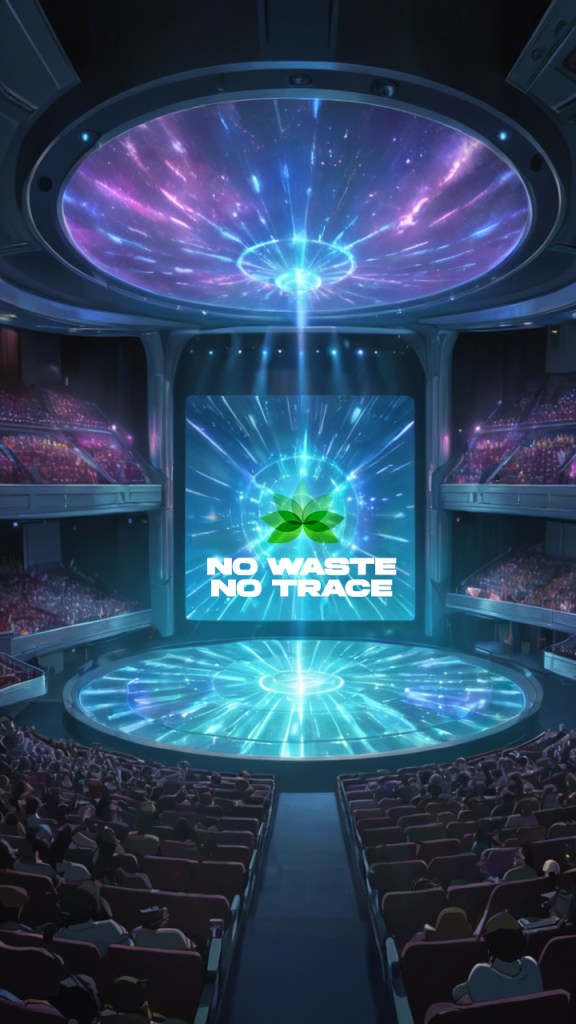
After the Summit, the ‘No Waste, No Trace’ slogan started making the rounds, with young people around the world clamouring for sustainable change. It filtered into pop culture, from art to music and other social media campaigns. Negasi’s PR juggernaut was rolling forward and gaining momentum.
Negasi was always a step ahead. He had presented part of his Dev solution to African leaders, anticipating the Eastern Revolt after the Energy Clog of the 2040s. He and The Invaders set up a number of new offices during the political and economic chaos between Russia, China and the US. US Senator, Bennett Harrison, had accused Negasi of instigating and profiteering from the Energy Clog to make Dev a necessity rather than an alternative.
Negasi’s response was swift.
He put out a statement to address the comments from the US Senator;
“The real issue here is about the origin of the solution. People are fighting us because they always want the solution to be theirs. They place their pride and ego above the common good of humanity and fight solutions because they want to be praised as the saviours of the world. This isn’t a Hollywood movie. It’s reality! The world needs urgent solutions and we should be willing, as leaders, to put the welfare of our people and this planet ahead of our pride.
I want people to probe the authenticity of the device and the veracity of our claims that this solution will work. I don’t think it makes sense to start asking us if we are making money from it. The companies that cracked oil to give the world energy did that making staggering profit for centuries. The same goes for electricity, connectivity, etc.
Almost every solution that has become a vital part of life was built by profit-making businesses. We even sell oxygen, food and water – the basic necessities of life. It’s highly hypocritical of anyone to question our decision to earn a fair profit for our solution.
We attack the solution and pretend we don’t know the cause of the problem. Let’s ignore over 400 years of pollution and negligence. Dev is THE PROBLEM. #ClimateChange.“
It was easy to see why the world would turn on the Senator and praise Negasi. Nobody really likes politicians and we all know they can make life difficult. After the Senator’s remarks and the heavily-biassed reportage across different media houses, Negasi set up a partnership with the Chinese government, de helping them set up an independent platform similar to Dev but available only in China. In return, China gave him their full support and protection.
For another 2 years, he was off the radar again, up until the formation of the Union of Governments – The System. As expected, the same old politicians had gathered to put themselves in power again but this time there were protests following the appointment of leaders from certain countries. To be honest, Negasi never lobbied for a position in the Council. The public nominated him through the Global Governance Electoral System. He got about 25 percent of all the nominations; nobody else got up to 10 percent.
He played a huge role in the return of peace to Africa and the Middle East. As a member of the Council, he became more influential. By 2051 he was Head of Intelligence and also the Head of Innovation for the System. His work with The System made him talk a lot less about Dev, or so we thought. He only mentioned at a press conference that they had started work on the upgraded Dev 2.0 but nobody knew anything else about it. It was not strange at this point; everything Negasi did was shrouded in mystery.
The Dark Web Invasion
In 2052, the world lost the internet. Socio-economic structures crumbled, some never to recover. In the aftermath, Negasi and MaDe technologies launched Dev 2.0, astonishing the world by reconnecting the world without missing a beat.
According to MaDe technologies, they had been working on something similar for quite some time, sensing the threats to switch take down the internet from underworld organisations. Negasi quickly proposed Dev 2.0 and his Network as the new means of connectivity and communication. The new network was compatible with older devices. Somehow they were able to connect older devices through a ‘Point of Adoption’ (very similar to what we used to call an IP and Internet Gateway). The real confusion was the fact that this new network seemed more like a recovered internet than a new network. All devices were still compatible. It stoked the rumours of the Invaders being behind switching off the internet. The entire structure matched what the world had as the internet. Negasi made huge donations to communities around the world, giving people connected devices and unlimited access, to encourage the creation of information on the Network.
Barely two years later, MaDe completed their first Mass Decompactor – A project they had been working on for over 20 years. The device was launched on 29th August 2054, to mark Negasi’s 50th birthday.
___________________________________________________________
Development 1.0 is the first virtual universe created by Tariku Negasi. This universe required a VR gear called uRetina to access it and experience the virtual world.
uRetina – A VR eyewear that allowed interaction with a virtual world – Dev 1.0. It also had other capabilities like instant pictures, video recording and full mobile device control.
Mass Decompactor – Negasi’s proprietary device designed to aid the conversion of mass to electromagnetic waves. The device enabled the full transition of man to a digital world.
The Invaders are a group of digital activists who rose to prominence first in the early 2030s when they fought corporate dominance.
 The Time Tale
5 Comments Add yours