China and the Neo-Colonial Expansion
China had almost taken over all the major assets their African allies had used to barter for tech and weapons. From national railway lines to stadia, universities, industrial cities, China controlled these assets. They had tolled the major highways in African cities to repay debts to China. Some countries had to switch to the Chinese Yen, allowing the flow of resources and wealth back to China. Looking at the process, there was technically no way to fault China. They had given the African leaders a chance to repay the huge loans they had taken. However, they were almost certain that mismanagement and greed would keep these leaders from doing the right thing. It played out just as China expected. National debts had exceeded revenue in some cases, and the Chinese had to ‘save the day’ by taking over assets.
China had no problem with the Green Revolution. They supported it in front of global media. Behind the scenes, they knew their investment in Africa would take a huge hit with the new climate change mandate. if the world was to implement the terms of the 2033 Climate Change conference, Africa would suffer the most.
To avoid this, they funded the groups that stood alongside Russia, to protest the “convenient faux solution.”
This background formed the context for the 2048 General Assembly. It gave Negasi’s promise of a solution a more significance.
The General Assembly
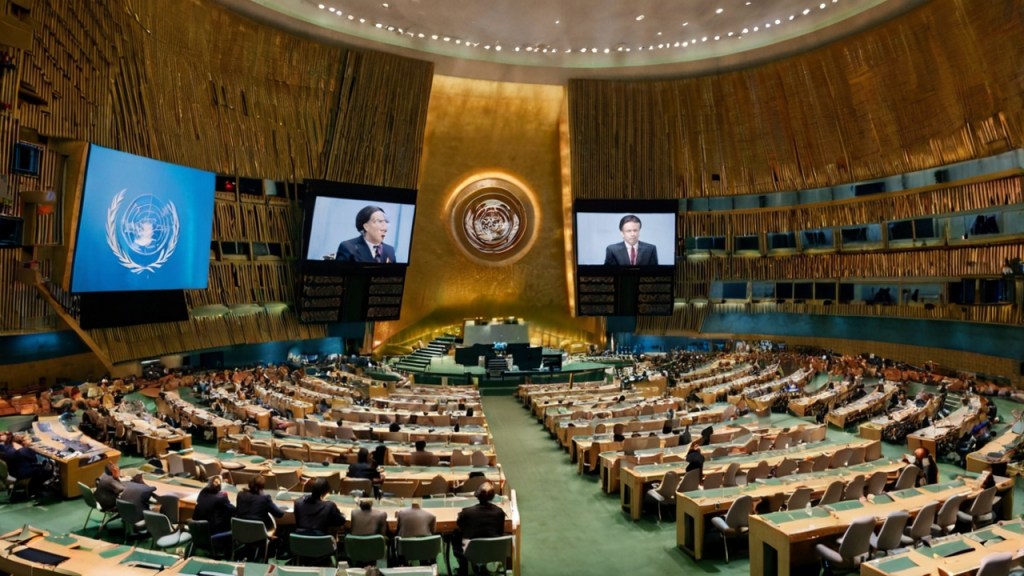
The General Assembly Hall in the United Nations Headquarters was an architectural marvel that combined grandeur with functionality. Its iconic wooden backdrop and the emblem of the United Nations set a solemn yet inspiring tone for the proceedings. The room was designed to accommodate representatives from all 193 member states. They all sat in a circular pattern that fostered a sense of equality and unity. The hall was bathed in soft, ambient lighting that highlighted the rich wood paneling and plush, blue upholstered seats, creating an atmosphere of gravitas and anticipation.
Negasi was always prepared for the big occasion, or so it seemed. From his composure, you would not believe he also had the same trouble choosing ties and socks as everyone else. He had a stylist who understood his style and the brand he wanted to show the world.
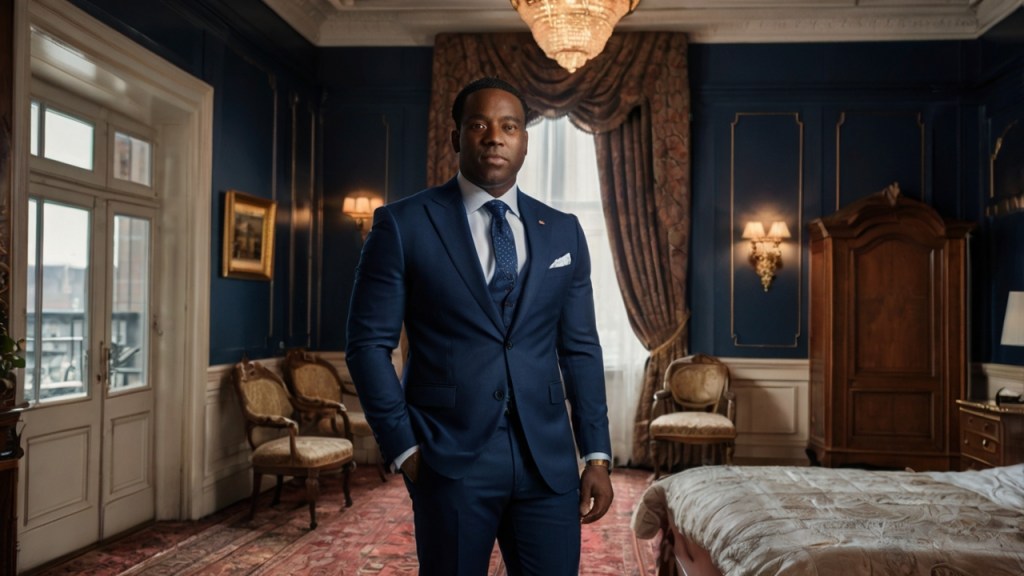
Negasi was dressed in a navy blue custom-made Brioni suit, impeccably fitted to show his trim and athletic figure. His shoes were as stylish as the occasion permitted; a dog-nosed black Brunello Cucinelli with thick soles. He hid the excitement in his eyes behind his regular black aviators. He picked up the cue cards from the table and walked gently across the room. He pulled the blinds and looked out. He could imagine how different the world would be in a few years. A world where human imagination defined everyone’s reality. He looked down at the cue cards and started speaking quietly, pausing for reactions as though he had an audience. He had rehearsed the notes for the presentation so many times and had even imagined the reaction from certain leaders.
As he made his way into the U-shaped Assembly Hall, the hum of voices grew louder, a testament to the anticipation and tension in the air. Normally, these meetings would take place in New York, but with the trouble and multiple sanctions between the US, China, and Russia, the meeting was moved back to the UN Building in Geneva to ensure all the leaders had no excuse to avoid it. Inside the hall, a little over 1000 people were scattered in clusters, each group engaged in fervent discussion. There was a constant hum of voices; nothing quite perceptible. Negasi’s assistant walked a few paces behind him, taking calls and preparing the media team for the press conference he would give after the Assembly.
Negasi sat comfortably, waiting for a chance to introduce the world to his game-changer – MaDe, and his plans to get every nation on board. However, before his big reveal, the bigger issue to be addressed was the ban on fossil fuel-powered machines. When he saw the agenda, he smiled. He turned to his assistant and said, “I think it is a great idea for all nations to debate these problems to help highlight our solution. The endless arguments would help them see that there’s no better solution than what we are proposing.” Everything fell into place perfectly. It would present him as the hero that would save the world, not only from energy challenges and economic turmoil but also from an impending war. He checked with his assistant to confirm the warring states had their leaders around, not just representatives.
The first two items on the agenda went by without any notable issues. After what seemed like an eternity, he was jolted back to full attention for the third item on the agenda.
“The 4th plenary meeting of the 21st emergency special session of the General Assembly is called to order. The Assembly will now consider agenda item three entitled ‘An appeal to reverse the ban on fossil fuel machines’ in the letter dated 17th July 2048 from the Permanent Representative of Russia to the United Nations Economic Council S/2048/142.”
“I now give the floor to the distinguished representative of Russia.”
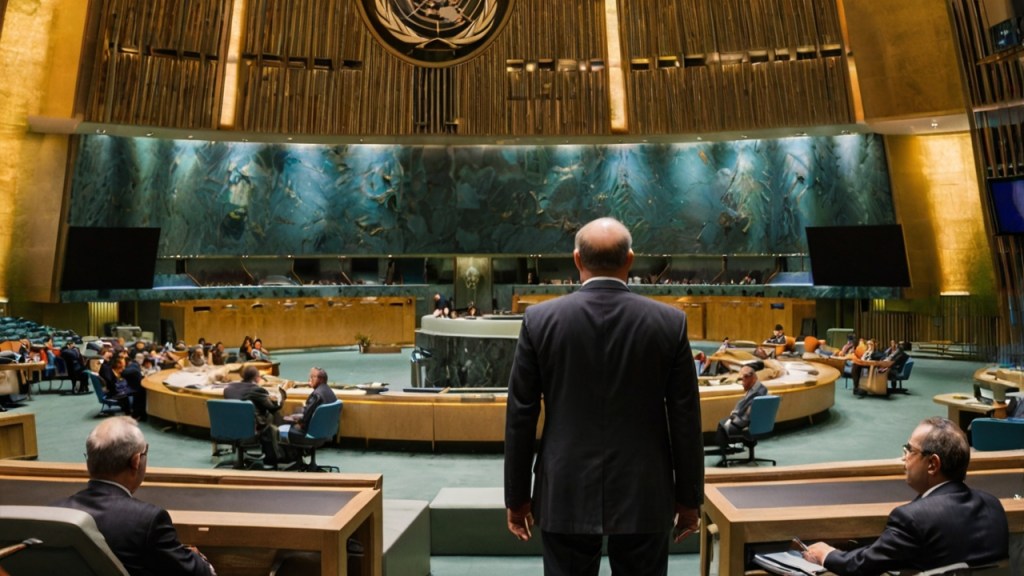
The Russian delegate stood tall and imposing, his presence commanding attention as he began his speech. “Esteemed delegates, distinguished guests, today, as we convene in this hallowed hall of international diplomacy, I stand before you not merely as a representative of the Russian Federation but as a voice for the millions across the globe whose aspirations for progress and development hang in the balance. The issue before us is not merely a matter of policy; it strikes at the very heart of fairness and equity in our global community. The proposal to reverse the ban on fossil fuel-powered machines is not just about energy sources; it is about the fundamental right of every nation to chart its own path to prosperity.”
As the Russian delegate spoke, Negasi observed the reactions around the hall. The faces of the delegates reflected a mixture of concern, defiance, and weariness. The soft lighting highlighted the tension etched into the lines of their faces, each one a testament to the high stakes of this debate. The temperature in the room felt warmer than usual, adding to the discomfort and emotional weight of the moment.
“We cannot allow ourselves to be blinded by the rhetoric of environmentalism while turning a blind eye to the stark realities of economic disparity,” the Russian delegate continued. “The path to a sustainable future cannot be paved with the sacrifices of the marginalized and the disadvantaged.”
Negasi’s mind was already on his response. He knew his moment was approaching. As the Russian delegate concluded his impassioned plea, Negasi felt a palpable shift in the room. It was time – his time!
Negasi’s Speech
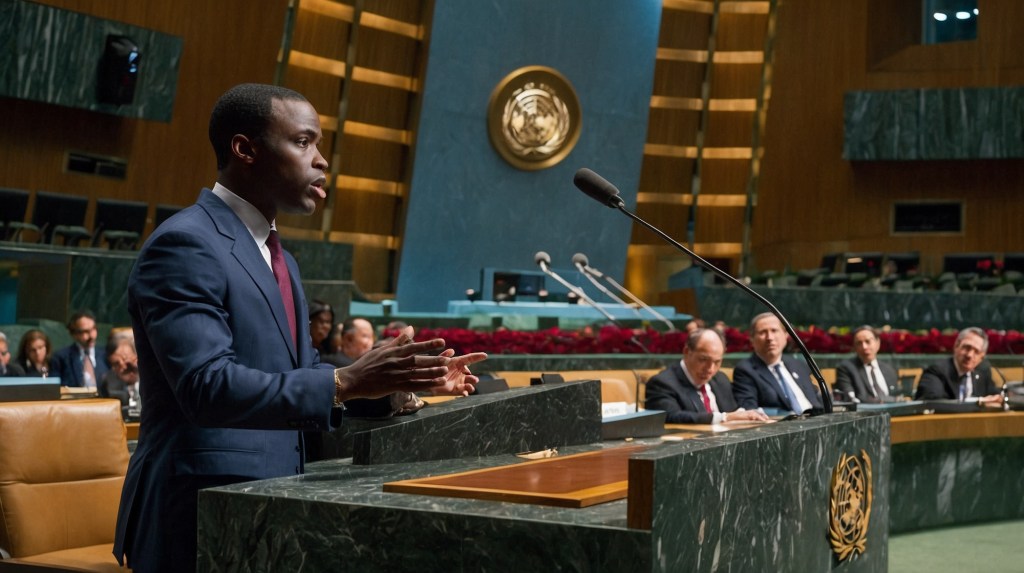
He rose with a calm confidence that belied the gravity of his message. As he made his way to the podium, the hall quieted, the hum of voices dissipating into an expectant silence. The soft lighting cast a warm glow over his features, emphasizing the determination in his eyes.
“Distinguished delegates, esteemed colleagues, and friends,” Negasi began, his voice carrying a tone of warmth and charisma that immediately drew the audience in. “We stand at a pivotal moment in human history. The challenges we face are daunting, but within them lies the opportunity for transformative change. Today, I am here to introduce you to a vision that transcends our current limitations—a vision that I believe will usher in a new era of human potential and progress.”
Negasi paused, letting his words sink in. The silence that filled the hall was thick with anticipation. “Imagine a world,” he began, his voice rich with emotion, “where the constraints of our physical reality no longer limit our ability to solve the most pressing problems. A world where we can explore new frontiers of existence and create solutions that are as boundless as our imagination. This is the promise of Dev—a universe of existence where the possibilities are endless.”
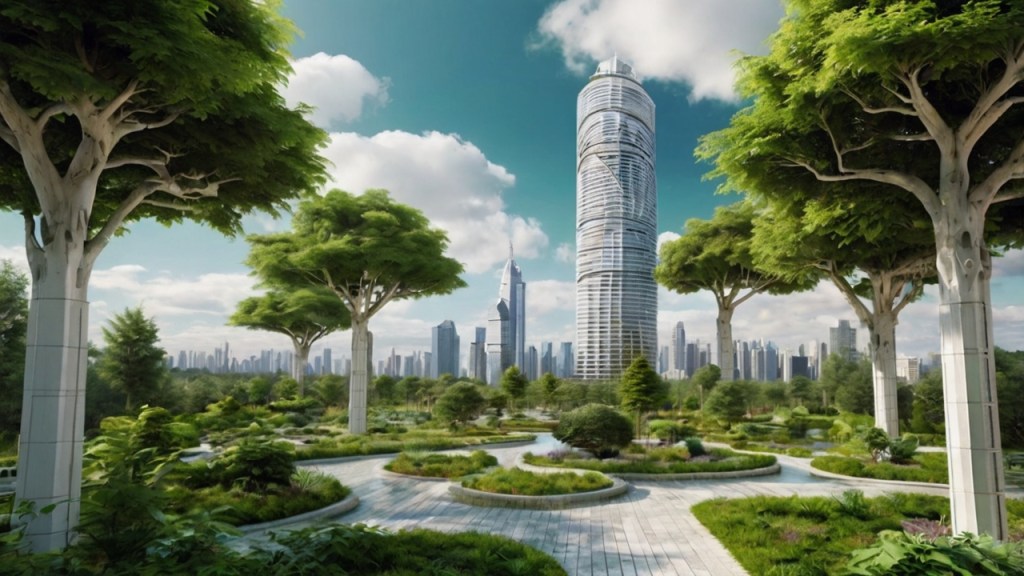
The hall was captivated. Negasi’s charisma, coupled with his visionary proposal, created an atmosphere charged with hope and excitement. Delegates leaned forward in their seats, eager to hear more.
“Dev is not just a technological advancement; it is a paradigm shift,” Negasi continued, his voice resonating with conviction. “It is a space where we can innovate without the physical and environmental constraints that have historically hindered our progress. It is a platform for global collaboration, where nations can come together to share knowledge, resources, and solutions in ways that were previously unimaginable.”
He looked around the room, meeting the eyes of delegates from every corner of the globe. “The international community, as António Guterres once reminded us, ‘seems incapable of coming together’ to respond to intensifying crises. Yet, through MaDe, we have the opportunity to overcome this fragmentation and build a future based on multilateralism, cooperation, and mutual respect.”
Negasi’s words resonated deeply. The room was silent, save for the occasional rustle of paper as delegates took notes. The soft lighting cast a serene glow, creating an almost reverent atmosphere as the significance of his message took hold.

“In this new universe of existence, we can address the cascading crises of our time—climate change, economic disparity, geopolitical tensions—with a fresh perspective,” Negasi said, his voice imbued with a blend of optimism and urgency. “We can create a sustainable, inclusive, and prosperous world for all. This is not just a dream; it is within our reach. But it requires bold, ambitious, and transformative actions, anchored in international solidarity and effective cooperation at all levels.”
Negasi paused, his eyes scanning the room, filled with the faces of those who held the power to change the course of history. “We stand at a crossroads. The challenges we face are immense. Climate change is accelerating at an alarming rate, threatening the very foundations of our existence. Economic disparities are widening, leaving millions in poverty while a privileged few amass unimaginable wealth. Geopolitical tensions are fracturing our world, pushing us ever closer to conflict and division. As Kofi Annan once said, ‘We can love what we are, without hating what—and who—we are not.’ This ethos must guide us now more than ever.”
He continued, his voice growing stronger with each word. “The world needs a rising tide that lifts all boats, not just the privileged few. We need a solution that transcends borders, ideologies, and economic disparities—a solution that embodies the spirit of the United Nations. The significance of the proposed resolution for MaDe is monumental. It is akin to the transformative impact of UN Resolution 1, which established the framework for international peace and security in the aftermath of World War II. It is as groundbreaking as Resolution 3275, which marked a turning point in the fight for gender equality. It holds the promise of the Convention on the Rights of the Child, encapsulated in Resolution 44/25, which safeguarded the rights of our youngest and most vulnerable. And it carries the weight of Resolution 61/295, which recognized the rights of indigenous peoples and their invaluable contributions to our global heritage.”
Negasi’s voice softened, carrying a note of profound empathy. “The challenges we face are daunting, but they are not insurmountable. We have the power to change the course of history. Imagine a world where a child born in a remote village has the same opportunities as a child born in a bustling metropolis. Imagine a world where nations no longer compete for resources but collaborate to ensure sustainable prosperity for all. Imagine a world where the artificial barriers that divide us are replaced by bridges of understanding and cooperation.”
He took a deep breath, his passion evident. “MaDe represents a new dawn for humanity. It offers us the tools to address the pressing issues of our time with unprecedented creativity and collaboration. Through MaDe, we can harness the collective genius of our global community to tackle climate change, eradicate poverty, and resolve conflicts. It is a beacon of hope, a testament to what we can achieve when we come together as one human family.”
Negasi’s eyes glistened with emotion as he concluded. “Let us not be deterred by the magnitude of our challenges. Let us be inspired by the magnitude of our potential. As Dag Hammarskjöld once said, ‘The UN was not created to take mankind to heaven, but to save humanity from hell.’ Today, we have the opportunity to take a bold step towards that salvation. Let us seize this moment with courage and determination, and let us commit to building a future where the promise of MaDe becomes a reality for all.”
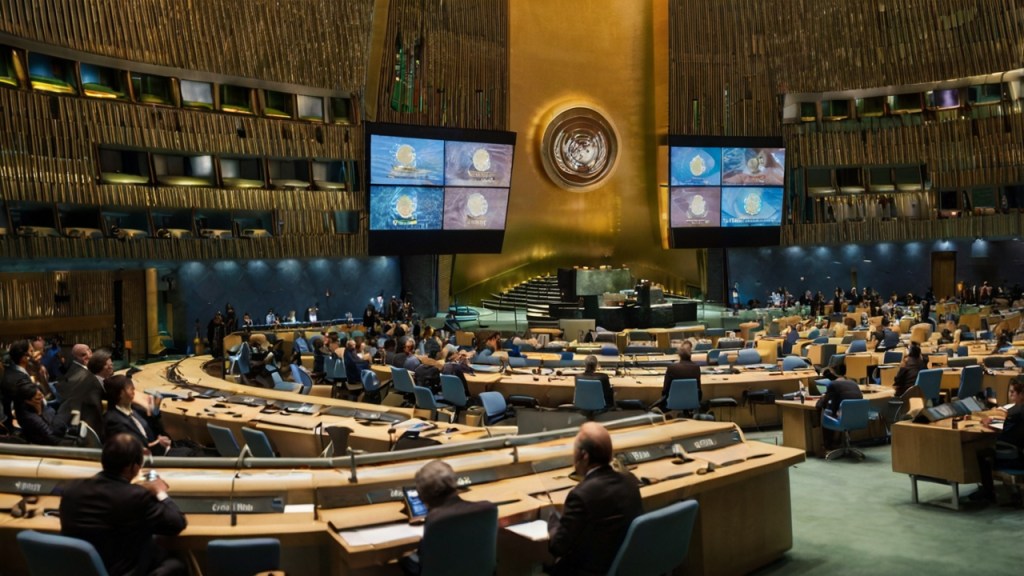
The room erupted in applause, but not all rose to their feet. While many delegates stood in a standing ovation, their faces alight with hope and belief in Negasi’s vision, a few remained seated, their expressions guarded and tense. For these sceptics, the promise of MaDe was a double-edged sword. They thrived on the current power dynamics, and the equality MaDe promised threatened to dissolve their perceived advantage. The notion of a level playing field, where innovation and collaboration replaced competition and dominance, was unsettling. For some, it was a future that stripped away their power and influence, leaving them vulnerable in a world where their leverage no longer held sway.
Negasi stepped away from the podium. His heart was full. It was hope and anxiety, knowing the resistance he would face. This resonated across the hall. It seemed to pulse with a complex mix of emotions—hope, excitement, skepticism, and fear. As he looked around, he could tell that the delegates were grappling with the dawn of a new era. Some saw a beacon of collective imagination and equity; others saw a threat to their established order.
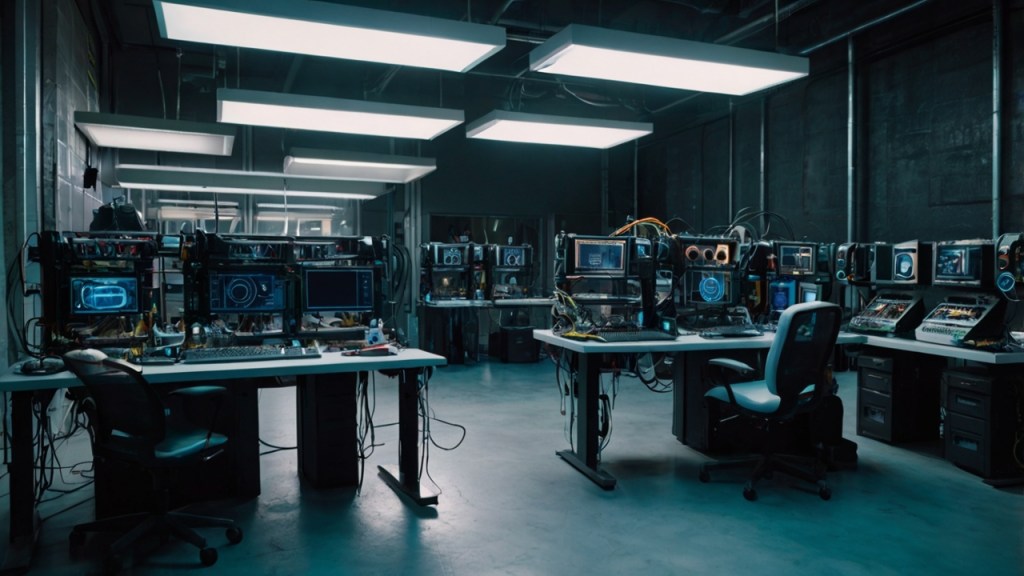
The future of the world, hung in delicate balance. It swung between the promise of unprecedented unity and the reality of entrenched divisions.
The story of the 103rd UN General Assembly remained open-ended. It was testament to humanity’s enduring struggle between the pursuit of unknown adventures and the comfort of familiar paradigms.
 The Time Tale