After the devastating Dark Web Invasion, the world was in chaos. The digital world, once a vital part of daily life, was shattered. Governments struggled to regain control, economies collapsed, and people lost trust in technology.
In the midst of this, Tariku Negasi came forward with a plan. He unveiled Dev 2.0, a new network that promised to reconnect the world and restore order. But many were suspicious. Was Negasi a savior, or did he have a hidden agenda?
Negasi had always been a mystery. He was a prodigy from the remote Afar region in Ethiopia. He became famous for his groundbreaking technologies. His team, known as The Invaders, were digital vigilantes. They had a massive global following because they targeted corrupt leaders. However, as the world struggled to recover from the invasion, rumors spread that The Invaders might have caused it. Their timing, their advanced countermeasures, and their deep knowledge of the digital underworld made people question their motives.
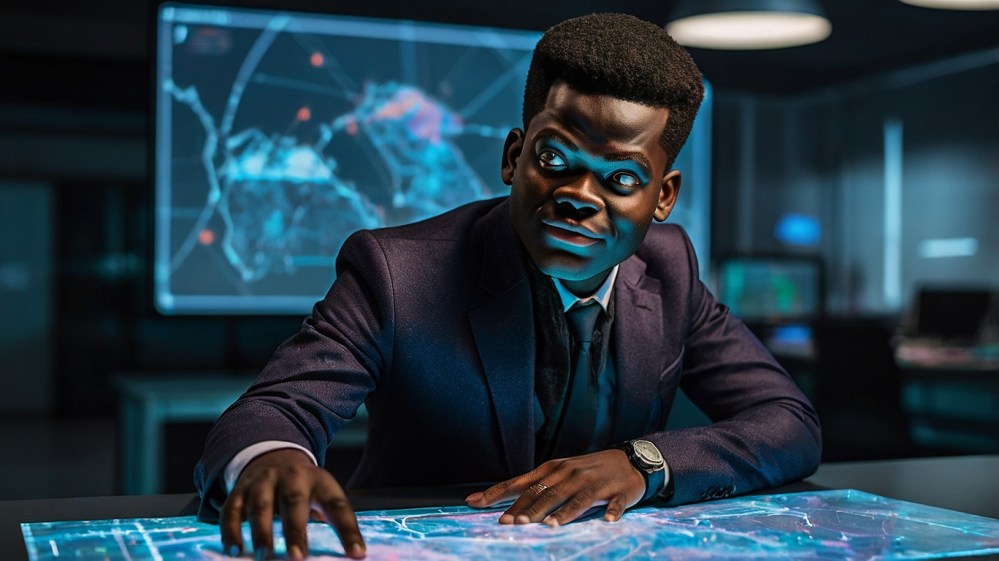
While the world speculated, Negasi and his team worked in secret. Only a few knew the details of their operations. What was clear, though, was that they were racing against time. The world’s digital infrastructure was in ruins, and a new network was crucial. Not just to reconnect everyone but to build something safer and stronger.
Dev 2.0 was revealed as the cornerstone of a new digital era. It was an evolution of Negasi’s earlier work, designed to be secure and resilient. The new network, with a ‘Point of Adoption,’ allowed older devices to connect seamlessly. This bold vision required massive coordination and innovation.
As Dev 2.0 spread, nations reacted with mixed emotions. Some saw it as a lifeline, a way to reclaim the digital world. Others were wary, fearing it was a trap that would give Negasi control over global systems. The political landscape became tense. Countries fought for control, each wanting to secure its own future in this new digital order.

The United States, still recovering from the attack, accused Negasi of using Dev 2.0 to gain power. They called for an independent network to protect national interests. Russia also launched its own project, afraid that relying on Dev 2.0 would leave them vulnerable. China, whose vast digital infrastructure was crippled by the invasion, was torn between adopting Dev 2.0 or creating its own solution.
The stakes were high. Whoever controlled the new network controlled the flow of information and could influence politics, economies, and societies. Negasi spoke publicly about unity and cooperation. But behind closed doors, his team faced a maze of challenges. The Invaders, led by the strategic Basira, worked tirelessly to ensure Dev 2.0 was not only adopted but also trusted. Aamir al-Hakim’s AI algorithms protected the network from threats, while Lex’s deep dive into the dark web provided valuable intelligence.

Despite their efforts, public opinion was split. Some saw Negasi as a hero, stepping in when the world needed him most. Others believed he was a puppet master, manipulating events to become a digital ruler. Conspiracy theories thrived, fed by the secrecy of The Invaders’ operations and their immense power.
Religious leaders, like Pastor Aremu, fueled fears. In his apocalyptic sermons, he warned that Dev 2.0 was the work of the digital Antichrist, a tool for control and domination. His followers viewed it as a force of evil, further eroding trust in Negasi.
As the world rebuilt, the shadow of the Dark Web Invasion lingered. Governments and corporations invested heavily in cybersecurity to protect against future attacks. The Invaders continued their watch from the shadows, guardians of a fragile digital peace.
Negasi’s legacy was hotly debated. Was he a master manipulator, or a misunderstood genius who saved the world? The truth, hidden beneath layers of secrecy, remained unclear.
The Dark Web Invasion and the rise of Dev 2.0 reminded everyone of the delicate balance between innovation and control, trust and fear. In this new digital age, the line between hero and villain, savior and oppressor, was more blurred than ever.
 The Time Tale