The Visionary
Alexander Graham Bell – I bet you’ve heard the name somewhere. Well, if you haven’t, he created the telephone in 1876. However, long before 1876, people had transmitted sound from one end to the other, either using strings; Robert Hooke in 1672, or by pressing different buttons; Samuel Morse in 1838. What they did many centuries ago set the foundation for what we decided to create here at MaDe. My name is Harry Coleman and I am the founder of the Addis Tech Hub, now known as MaDe Technologies.
The Foundation
In 2003, I visited Rwanda and started a tech movement, giving young Africans seed-funding for ideas that I thought could be the next big thing. By 2012, I learned about a new hub in Kigali where students, fresh graduates, entrepreneurs, and innovators were invited to work on their ideas/projects to turn them into viable business models. The kLab was a model with the same idea I had but a more structured version. I knew I couldn’t compete with them. First, they had a lot of partners ready to invest because they could connect better with the locals. I knew I had to leave but I took the idea and the kLab model to Ethiopia, one of the growing tech spots in East Africa at the time. There, I met with a couple of friends I had made during my time in the African tech circle. I shared the idea with them and they helped me set up my company – a tech hub in Addis Ababa.
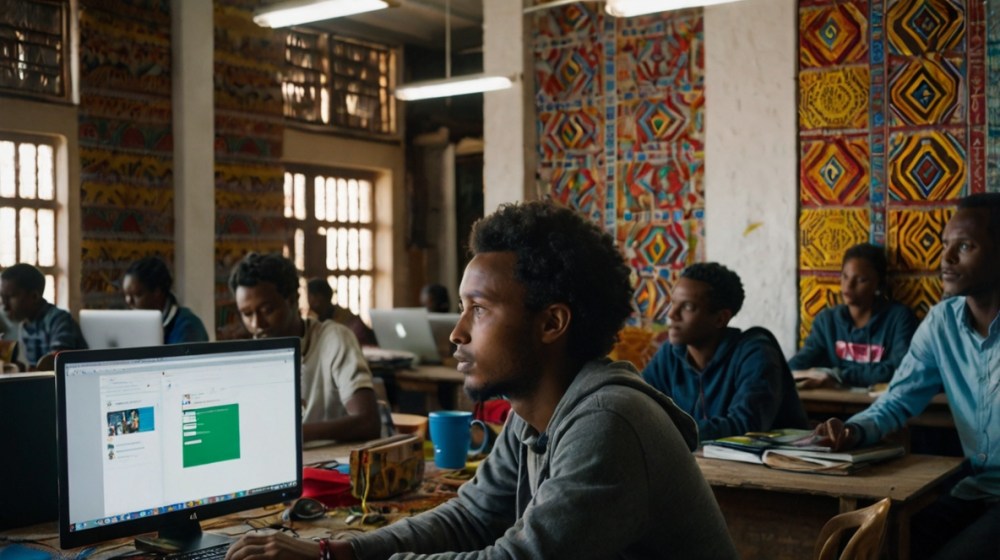
Initially, it was called ‘The Addis Tech Hub’. I visited a couple of universities to pitch the idea to students with the hope of getting many of them to start working at the hub. It was on one of such visits that I met Ebo Negasi, a lecturer at Semera University. Ebo had four kids, and the third was a boy named Tariku; a bright, socially awkward kid who took a unique interest in the hub. He was already spending more time at the hub than kids within his age group. Tariku had an understanding that was way beyond his age. He asked questions and imagined possibilities that sometimes went against the rules of science. We knew he was special and treated him as such.
The Seed of Innovation
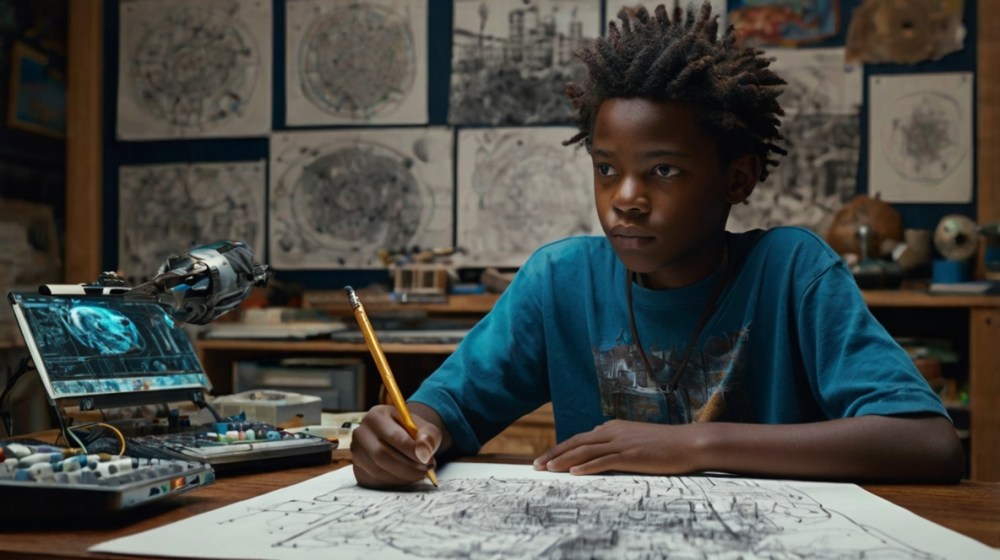
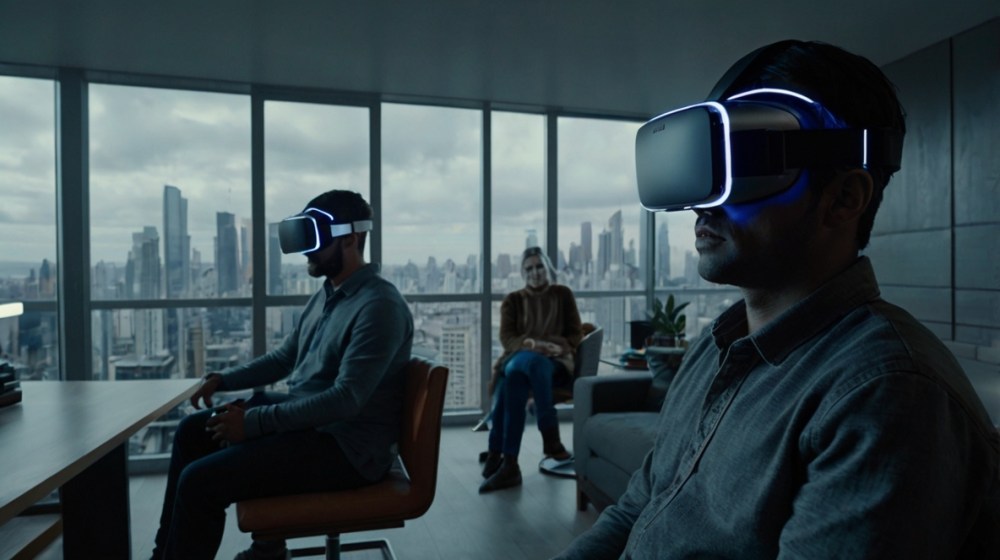
In 2015, the young Tariku shared his design for a project he called Development 1.0. He was barely 11 years old but somehow he had redesigned the world, literally. It was a recreation of the world, with the possibility of making a game out of it. However, he claimed he didn’t want a game; he wanted real life on it. We couldn’t wrap our heads around it at the time. We saw the potential as a virtual world and we helped him develop part of it. We made the virtual reality gear for people to have an immersive experience of the world he created. That was the birth of uRetina, the gateway into Dev 1.0.
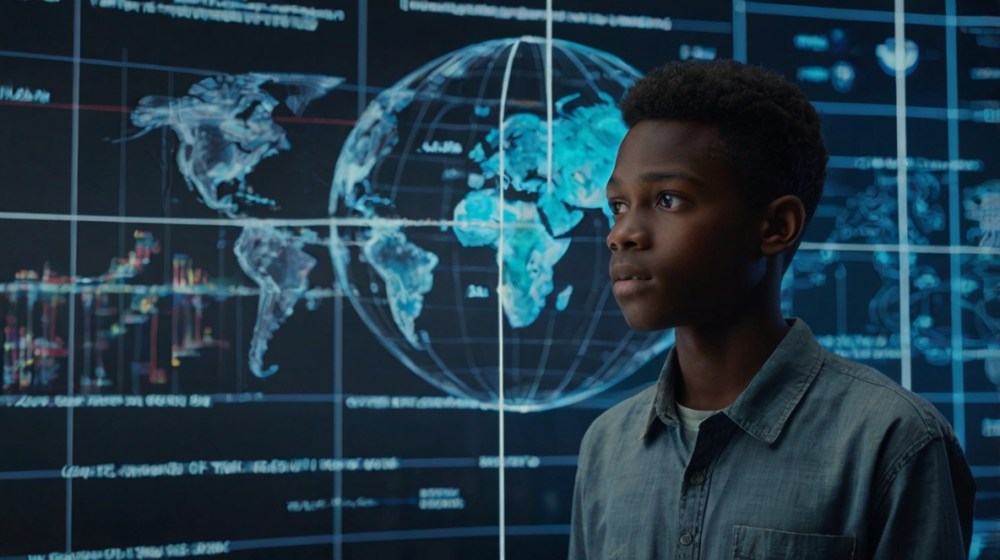
By late 2018, Dev 1.0 was up and running. We struggled to get people to adopt it, even for recreation. There were newspaper headlines that called it ‘Another White Elephant Project’. It was mentioned in the same breath as the floating school in Makoko, Nigeria. They called Dev 1.0 and uRetina award-winning projects that had good PR but didn’t get off the ground.
Everywhere we pitched for funding, we were given lectures on how every business must solve a problem and Africa’s problems are basic, not things that VR would solve. They asked us to think about food, education, health, financial inclusion, and the likes. I recall our interview on Lions Den went viral. It was humiliating, to say the least. By August 2019, we decided to vote to shut it down because we were bleeding financially but Negasi asked us to give him six months to think of a better way to market it. He promised that after six months if it didn’t take off, he would shut it down or convert it to an RPG battle game. That would still mean we would line up behind the popular games at the time – Eve Online, Minecraft, Fortnite, Call of Duty, PUBG, and the likes.
In December 2019, everything changed. The world was faced with a pandemic that led to a global lockdown. That challenge was the turning point for us at the hub. Negasi’s Dev 1.0 became the way forward. It was the perfect choice for virtual interactions. It was an escape from the boring alternatives that restricted movement and only offered limited interaction. We saw the download numbers shoot through the ceiling. The media came back, this time to praise our foresight and ingenious thinking. They did everything but apologize. People talked about our story and made motivational videos from it. It was overwhelming.
Next, the tech giants jumped on Dev 1.0. We had more than 30 different offers from around the world. I recall QuantumPlay Studios had offered about $75-80 million for ten per cent equity and we were all excited. That was going to be our big payday but Negasi rejected the offer. He wanted us to build it ourselves. He said he wanted to take humanity to that world – not virtually, but in the real sense.
I went home depressed that day. I had just seen a deal of $80 million fall apart because of a teenager’s fickle dream. It was sheer madness at the time. We just couldn’t understand his vision. Looking back now, I have to say Negasi is a genius! Today, Dev has evolved and has made us a Fortune 500 company and MaDe is on course to smash the $1 trillion market cap. This is a company that Sandhurst had valued at $800 million some years back.
The First Breakthrough – Annihilation Technology
The Addis Tech Hub changed dramatically. We evolved from a place where nerds and socially awkward people hung out to one of the most sought-after workplaces in the country. We commissioned Space Finish to redesign the place, but that was not the biggest transformation. It was the product we had been working on for quite some time – the Mass Decompactor, simply known as MaDe.
Our first version of the MaDe device was built using the concept of matter-antimatter annihilation. Annihilation technology allowed us to convert mass directly into energy by pairing matter with antimatter, which, when brought together, annihilate each other and release energy in the form of gamma rays. This energy was then meticulously captured and transformed into electrical signals that could be transmitted digitally.
The device had an elegant, futuristic design. It looked like a sleek, transparent pod with intricate patterns of light coursing through its surface. When a person entered MaDe, they were enveloped in a shimmering field that began the conversion process. Within moments, their entire mass was converted into energy, safely stored and ready for digital transmission. The technology was groundbreaking, but it was just the beginning.
The Quantum Leap – Teleportation and Digitalization
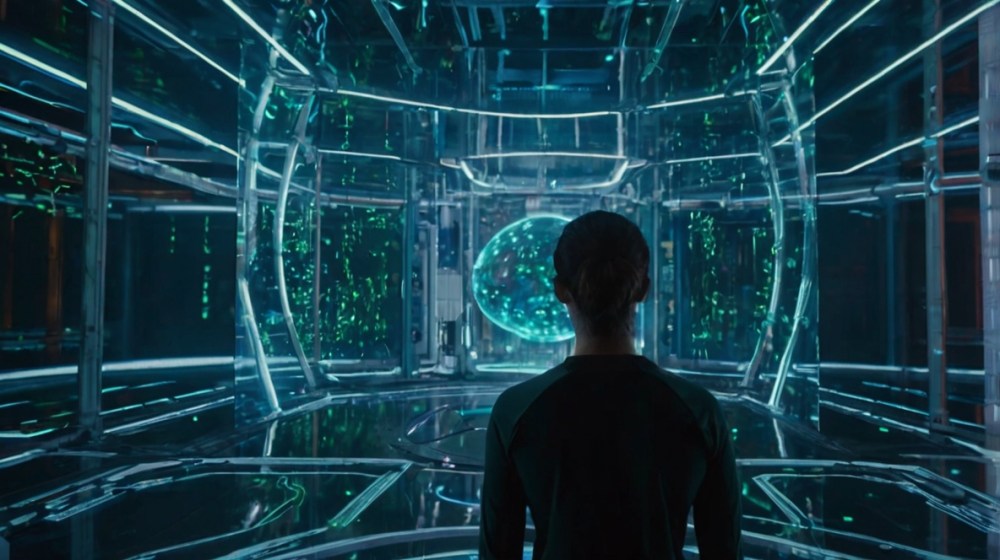
By the 2060s, Negasi had another vision for MaDe. While our matter-antimatter device was revolutionary, he dreamed of an even more advanced method to transition humans to the digital world. This led us to the next breakthrough: quantum teleportation and digitalization.
Negasi’s new approach involved scanning the human body at a quantum level, capturing the precise quantum state of every particle. This information was then encoded into a digital format, effectively transforming the person into a stream of quantum data. The quantum data could be transmitted over vast distances with minimal loss, thanks to quantum entanglement.
The upgraded MaDe pod was a marvel of modern technology. It featured a sleek, reflective exterior with an intuitive holographic interface. Users would step into the MaDe pod, where they were gently surrounded by a field of quantum sensors. These sensors scanned the quantum state of their body, converting their physical and conscious essence into a digital stream. This stream was then transmitted to the desired digital environment, where advanced algorithms reconstructed the person, allowing them to exist and interact within a digital world as if it were reality.
The New Reality

With the new MaDe pod, Negasi’s dream was fully realized. The world now had a seamless way to transition between physical and digital realms. The applications were limitless: from instant travel and teleportation to creating a fully immersive digital society. People could live, work, and play in the digital world, experiencing life without the physical limitations of the real world.
The MaDe pod was not just a device; it was a gateway to the future of humanity. It bridged the gap between the physical and digital, offering a new way to experience existence. The impact was profound, revolutionizing industries, solving logistical challenges, and opening new frontiers for human interaction and innovation.
Today, MaDe stands as a testament to the power of vision, perseverance, and the unrelenting pursuit of innovation. From a humble tech hub in Addis Ababa to a global leader in quantum technology, our journey is a story of how dreams can shape reality and how technology can redefine the future.
 The Time Tale