Many people don’t understand the pressure of living in an overcrowded city. When I was in Tokyo, I didn’t leave my house for 13 years.
I was born in Utashinai, Japan, in 2046. My father keeps talking about how this city was a great place, especially for miners, but I can’t relate. When I was 15, my dad got a job in Tokyo, and he left. My mother and I joined him three years later.
When we arrived in Tokyo, my first concern was the rowdiness of the city. So many people, so much chaos. It was as though everything was spinning in circles around me. Stepping outside felt like entering an entirely new world. It made me dizzy and lost. There were always people walking, but nobody noticed anyone else.
Tokyo, with 15 million people, was ironically lonely for many of us. Everything was happening all at once. I had that dizzy feeling every time I stepped out. I was afraid of the streets, school, and just being out there with people. At first, I thought I was the only one who felt this way, but I was wrong.

There’s a word for people like me in Japan: Hikikomori. It’s what they call those of us who shut themselves off from the outside world. We stay indoors for months or even years due to extreme social withdrawal and anxiety. Personally, I find my room safer than the chaotic world beyond my windows. It’s not uncommon in Japan—my dad once told me that nearly a million of us suffer from it. I had become one of them, trapped in my own house by a fear that I couldn’t fully explain.
Each day, I watched the city from my window, never stepping outside. People wondered how I could enjoy the same view for over a decade. For me, it was better than immersing myself in the disorder of the streets. My parents were ashamed of my condition, so they helped hide me. No school, no job. I was a liability to them. I did what I could—cleaning and staying out of their way. My mother bought me a phone, and I spent most of my time playing video games on Network 2.0. That became my world, my escape from Tokyo’s madness.
My parents were worried, though. My father often talked about the ’80 – 50 problem‘. He keeps asking me who would take care of me now that they are old. I never thought about it. I want to get through each day without thinking of the future. I had no skills, no certificates—nothing to show for the years I’d spent inside. By the time I was 30, my father introduced me to Dev 2.0. I had already explored Dev 1.0 before the dark web invasion. Maybe that’s why I didn’t get bored being at home. My dad promised to get me the best version of Dev if I gave the Hidamari Collective a try.
The Hidamari Collective is a small NGO that helps Hikikomoris like me transition back to normal life. They were kind and patient, the first people besides my parents who seemed to notice me. They didn’t come to my sessions with phones or gadgets, just a human connection. I went for quiet walks with my guide, in less crowded areas. We’d drive out in a tinted car, and I’d only step out when we reached a serene location. I’d been to about eight sessions by my 31st birthday when my dad surprised me with a MaDe device.

People talk about Dev, but I don’t think they fully grasp what it means for people like me. In Dev 2.0, I could design my body, my face, my hair—everything. Maybe part of the reason I never left the house was because I didn’t feel attractive. Nobody cares about inner beauty; it doesn’t show on a profile or in a picture. If my online friends had seen me in real life, I’m certain they would not have spoken to me. But in Dev, I could be myself and still choose a body I liked. I could be any gender available—or even choose to remain undefined. It was liberating. For the first time, I could control how I appeared to the world.
Here, in Dev, I’ve started to think about the future for the first time in years. The little worries that plagued me every day on earth—like certificates, skills, and appearance—don’t matter here. We are all equal. No countries, no religions, no race or gender hierarchies. Just people. We’re all the same in this digital world, global citizens; free from the fear and isolation that once defined me.
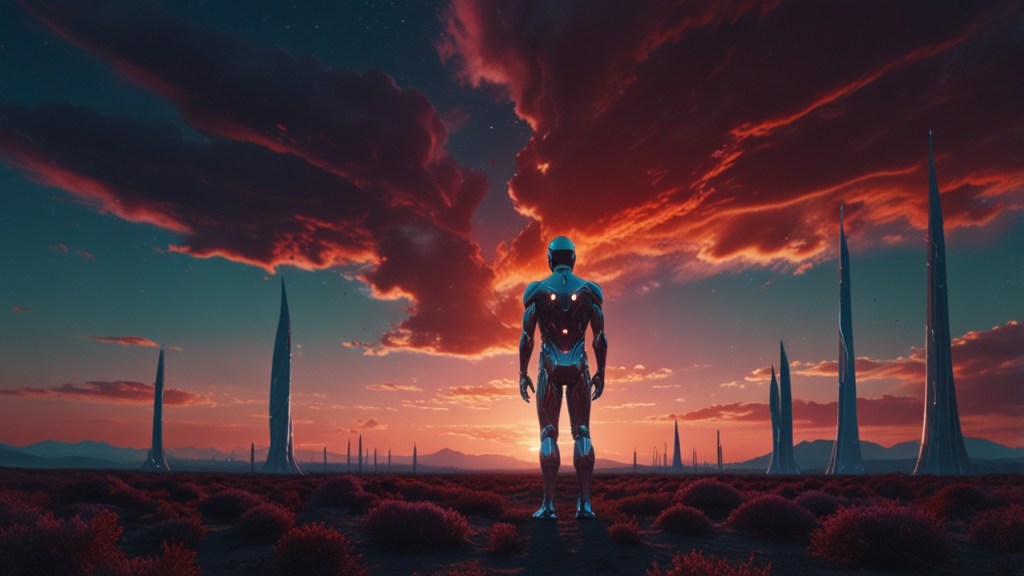
Of course, not everyone understands or accepts Dev. Some people are against it because they thrive on being better than others. Here, there’s no room for that superiority, so they fight to keep us from finding peace. But life doesn’t have to be as complicated as we made it on earth. I’m happy here. For the first time in my life, I feel truly free.
My name, Kiyoshi Masayuki, literally means “bright future,” and that’s exactly what I’ve found. I’ve discovered my sunshine here, and I can finally be Kiyoshi—not a Hikikomori.
 The Time Tale